![[Adobe Stock]](https://sp-ao.shortpixel.ai/client/to_webp,q_glossy,ret_img,w_750,h_375/https://www.psypost.org/wp-content/uploads/2025/07/sugar-skull-750x375.jpg)
A new scientific review argues that sugar addiction is not just a metaphor, but a real and measurable condition that mirrors the brain and behavioral patterns found in drug dependence. Published in the journal Brain and Behavior, the paper brings together a wide body of research to show that sugar can hijack the brain’s reward systems, influence emotional and cognitive functions, and drive compulsive consumption patterns in ways that qualify it as a behavioral addiction.
The review was authored by Di Qin of China-Japan Union Hospital of Jilin University along with colleagues from Changchun University of Technology. The researchers conducted an analysis of neurological, behavioral, and clinical evidence to make the case that sugar meets the criteria of addiction and whether it should be viewed similarly to gambling and gaming disorders—conditions now formally recognized as behavioral addictions by international psychiatric guidelines.
Behavioral addictions are patterns of behavior that, even in the absence of chemical substances, produce cravings, loss of control, withdrawal-like symptoms, and harmful consequences. These behaviors are driven by their ability to stimulate the brain’s reward circuits, much like substances such as nicotine or opioids. The World Health Organization’s latest diagnostic framework, the ICD-11, recognizes behavioral addictions that interfere with a person’s ability to function normally and continue despite negative consequences.
Food addiction, and sugar addiction in particular, fits this profile, the researchers argue. Sugar-rich foods are not only widely available and socially acceptable—they also exert powerful neurochemical effects. When consumed, sugar activates the brain’s dopamine system, which is responsible for producing feelings of pleasure and reward. Over time, repeated activation of this system by high-sugar foods may result in tolerance, meaning that larger quantities of sugar are needed to produce the same pleasurable effect. This creates a feedback loop that promotes overconsumption.
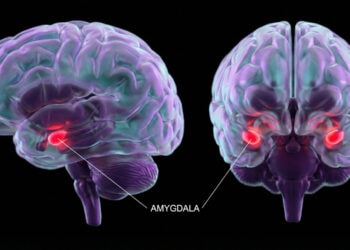
In animal studies, rodents that binge on sugar display behaviors similar to those seen in drug addiction: compulsive seeking, difficulty stopping, and even withdrawal symptoms. The researchers note that rats given sugar show enhanced responses to stimulants like cocaine and amphetamines, suggesting that sugar sensitizes the brain in ways that make it more reactive to other addictive substances. These effects are mediated by the same brain structures that underlie substance use disorders, including the nucleus accumbens, the prefrontal cortex, and the amygdala.
At the sensory level, the body is primed to respond to sweetness. Specialized receptors on the tongue and in the gut detect sugar, sending signals through the nervous system to the brain. Once sugar enters the bloodstream, it rapidly raises blood sugar levels and triggers the release of insulin. These metabolic shifts can lead to fluctuations in energy levels and mood, and in some cases, produce a rebound effect that triggers renewed cravings. Over time, this pattern can disrupt the body’s internal balance and reinforce habitual sugar-seeking behavior.
The review outlines how the brain’s reward pathways, particularly those involving dopamine, become altered by repeated sugar intake. Excessive sugar consumption can also impact other neurotransmitters like serotonin and endorphins, along with hormones involved in hunger and satiety, such as ghrelin and leptin. These changes may increase emotional eating and make it harder for individuals to resist cravings, especially when stressed or anxious.
The researchers note that sugar consumption is often used as a form of emotional regulation. Many people turn to sugary snacks when feeling overwhelmed or upset, relying on the temporary mood lift sugar provides. But this strategy may backfire. High-sugar diets are linked to long-term disturbances in emotional health, including heightened anxiety, reduced ability to handle stress, and even symptoms resembling attention-deficit disorders.
The review also highlights the ways in which sugar consumption affects brain structure and function. Prolonged high-sugar diets have been associated with inflammation in the brain, especially in areas like the hippocampus, which plays a key role in memory and learning. Animal studies suggest that chronic sugar intake can lead to cognitive decline, memory impairment, and increased impulsivity—traits commonly associated with substance dependence.
Children and adolescents may be especially vulnerable. Experiments in mice show that early exposure to high-sugar diets can produce long-term behavioral changes, including hyperactivity, poor impulse control, and reduced learning ability. Similar findings have led some scientists to question whether sugar exposure during critical developmental periods could increase the risk of emotional and cognitive problems later in life.
Sugar addiction may also contribute to physical health problems such as obesity, diabetes, and heart disease. According to the review, high-sugar diets disrupt the body’s ability to regulate appetite and metabolism, leading to excess weight gain and metabolic disorders. These changes can reinforce the addictive cycle by altering reward processing and impairing the brain’s ability to signal fullness or satiety.
In addition to neurological and metabolic changes, sugar intake also promotes low-grade inflammation throughout the body, which has been implicated in a range of chronic diseases, including rheumatoid arthritis and cardiovascular conditions. The authors cite evidence linking high consumption of sugar-sweetened beverages with increased inflammatory markers and adverse changes in immune function.
Although sugar addiction has not been formally recognized as a clinical diagnosis, the review calls for more research into how sugar affects the brain and behavior. The authors suggest that future studies should explore the genetic and environmental factors that influence vulnerability to sugar addiction, as well as the effectiveness of behavioral and pharmacological treatments.
Some medications, such as dopamine antagonists and opioid receptor blockers, have shown promise in reducing sugar cravings in animal models. However, their long-term safety and efficacy in humans remain unclear. Non-drug strategies, including cognitive behavioral therapy and public education, may help people develop better awareness of their eating habits and improve self-control. Other experimental interventions, such as brain stimulation and herbal compounds, have shown early signs of benefit but need more rigorous testing.
Ultimately, the authors argue, tackling sugar addiction will require a combination of approaches. These might include reformulating processed foods to reduce sugar content, creating healthier food environments, and providing psychological support for those struggling to change their eating behaviors. Public health campaigns should also work to raise awareness about the addictive potential of sugar and promote healthier alternatives.
However, it is important to recognize that the new review reflects the perspective of its authors. It is not necessarily the consensus view. Other scientists have recently argued against the concept of sugar “addiction.” For example, a 2016 review published in the European Journal of Nutrition challenged the idea that sugar is truly addictive in the way substances like cocaine or heroin are. The authors, who critically examined both animal and human studies, concluded that current evidence does not support classifying sugar as an addictive substance, particularly in humans.
They noted that addiction-like behaviors observed in rodents—such as bingeing, withdrawal-like symptoms, and dopamine changes—only appear when animals are given intermittent access to sugar after periods of fasting. These effects disappear when sugar is freely available, suggesting that the behavior may reflect the stress of restricted feeding rather than any pharmacological property of sugar itself. In contrast to drugs, sugar does not produce the same persistent changes in the brain’s reward system or motivational circuits, and rodents do not continue seeking sugar when it is paired with unpleasant consequences, a hallmark of true addiction.
In humans, the evidence is even weaker, they said. Most studies rely on self-report tools like the Yale Food Addiction Scale, which ask people whether they experience cravings or overeat certain foods. But the authors argue that these behaviors often overlap with conditions like binge eating disorder and are not specific to sugar. Importantly, research has not clearly identified sugar as the addictive component. People typically consume sugar in combination with fat, salt, and other ingredients in highly processed foods, making it difficult to isolate sugar’s unique effects.
The review in the European Journal of Nutrition concluded that while there are strong arguments for reducing sugar consumption and some people may experience intense cravings for sweet foods, calling this “sugar addiction” may be misleading.
The study, “Sugar Addiction: Neural Mechanisms and Health Implications,” was authored by Di Qin, Jiayu Qi, Fuqiang Shi, Zhihua Guo, and Hongwu Li.