![[Adobe Stock]](https://sp-ao.shortpixel.ai/client/to_webp,q_glossy,ret_img,w_750,h_375/https://www.psypost.org/wp-content/uploads/2025/06/colorful-brain-750x375.jpg)
A new study provides evidence that narcissistic and antisocial personality traits are linked to both shared and distinct patterns of brain connectivity. The research, published in the journal Psychophysiology, suggests that dysfunction in three core brain networks—known as the default mode, salience, and frontoparietal networks—may play a central role in shaping these traits. These findings offer a neuroscience-based framework for understanding overlapping yet divergent features of personality pathology.
Narcissistic and antisocial traits often co-occur, but they manifest in different ways. Narcissism tends to involve grandiosity, a heightened focus on self-image, and a need for admiration. Antisociality, by contrast, is marked by impulsivity, rule-breaking, and disregard for the rights of others. Both types of traits can exist at subclinical levels in the general population or present more severely as part of personality disorders. Understanding their neurobiological underpinnings could help clarify how they overlap and diverge, and why they tend to cluster in certain individuals.
“Narcissistic and antisocial personality traits often overlap in real life and can lead to severe interpersonal and societal problems,” said study author Alessandro Grecucci, an associate professor at the University of Trento and head of the Clinical and Affective Neuroscience Lab. “While psychology has described these traits for decades, we know less about how they are represented in the brain. Recent advances in network neuroscience, and especially the study of large-scale ‘triple networks’ in the brain, offered us a unique opportunity to explore whether these traits share neural mechanisms or have distinct brain signatures.”
For their study, the researchers focused on three large-scale brain networks often implicated in emotional processing and self-regulation. These include the default mode network (DMN), which is active during self-referential thinking and mind-wandering; the salience network (SN), which detects emotionally relevant stimuli and helps regulate responses; and the frontoparietal network (FPN), involved in higher-order cognitive control and planning. These three systems are thought to underlie key features of personality and psychopathology.
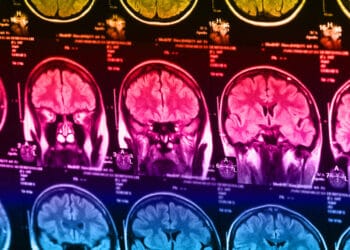
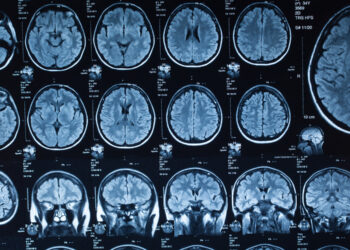
The research team used graph theory and machine learning to examine how these brain networks were organized in 183 healthy adults who had completed personality assessments and resting-state functional MRI scans. Participants ranged in age from 22 to 68 and completed the Personality Styles and Disorders Inventory (PSDI), which measures dimensional traits, including narcissistic and antisocial tendencies. Importantly, these participants were not clinical patients, which allowed the researchers to explore the neural signatures of personality traits across a broad spectrum.
To investigate network organization, the team employed graph-theoretical metrics, which model the brain as a set of nodes and edges—akin to a social network map. These metrics allowed the researchers to quantify both local and global properties of brain function, such as how efficiently information travels between regions or how central a particular region is to the overall network.
The researchers built predictive models using both traditional regression and a random forest algorithm, a form of machine learning that tests how well combinations of brain metrics can predict trait scores. They focused on connections within the DMN, SN, and FPN, while also including visual and sensorimotor networks as control regions.
The results indicated that narcissistic and antisocial traits shared several neural features. In both cases, lower connectivity within the salience network—particularly in the anterior cingulate cortex (ACC)—was a consistent predictor. This region plays a key role in emotional awareness and integrating information about risk and reward. Reduced connectivity in this area may reflect impairments in recognizing the consequences of one’s actions or regulating emotional impulses, potentially contributing to the interpersonal difficulties seen in both traits.
Both traits were also associated with higher efficiency in the lateral prefrontal cortex, a hub of the frontoparietal network. This suggests increased ability to strategically plan and control behavior—potentially to achieve self-serving goals or manipulate social situations. In other words, while both traits may impair emotional regulation, they might also enhance cognitive planning when it aligns with personal motives.
But the patterns diverged when it came to the default mode network. For narcissistic traits, greater connectivity in the medial prefrontal cortex (MPFC)—a core DMN region—was a strong predictor. This part of the brain is associated with self-reflection, social cognition, and constructing one’s identity. The finding aligns with psychological theories suggesting that narcissism involves frequent self-focus and exaggerated fantasies of power or status.
In contrast, antisocial traits were linked to reduced connectivity in the DMN. This pattern may reflect lower levels of introspection or a diminished capacity to reflect on the emotional consequences of behavior. People high in antisocial traits often display impulsivity and a disregard for others, which may be rooted in diminished self-monitoring or social imagination.
“We expected similarities, but we were struck by how clearly the patterns diverged in the default mode network,” Grecucci told PsyPost. “This may explain why narcissistic individuals often engage in more self-reflection (even if distorted), while antisocial individuals tend to act more impulsively and with less regard for self-consequences.”
The study also revealed distinct features beyond the triple network. For example, antisocial traits showed stronger involvement of the visual network, which might point to heightened visual attention or sensitivity to environmental cues. This finding is tentative but aligns with other studies suggesting enhanced perceptual processing in people with high Dark Triad traits.
The research team confirmed their results using seed-based analyses, which track how specific brain regions communicate with others across the brain. For narcissistic traits, the medial prefrontal cortex was functionally linked to areas involved in emotion, memory, and self-related processing. For antisocial traits, the same region showed connections to sensory and occipital areas—suggesting a more externally focused processing style.
The anterior insula, another salience network region, was more strongly associated with narcissism than antisocial traits. This region helps integrate internal body states and emotional signals, and has been linked to experiences such as social rejection and empathy. The finding may help explain why narcissistic individuals—despite their grandiosity—often show heightened sensitivity to perceived slights or criticism.
Meanwhile, the right rostral prefrontal cortex, a region involved in high-level cognition and goal setting, was more strongly linked to antisocial traits. Its role may involve instrumental planning or manipulative behavior rather than reflective insight.
“Our study shows that narcissistic and antisocial traits are linked to changes in the same core brain networks that help us process emotions, control behavior, and think about ourselves,” Grecucci explained. “Both traits were negatively predicted by the anterior cingulate cortex of the SN, reflecting reduced danger awareness and increased risky behaviors.”
“Conversely, both were positively predicted by the lateral prefrontal cortex of the FPN, suggesting augmented strategic thinking to manipulate others and increased planning skills to achieve personal goals. However, they differ in the default mode network—narcissism shows more self-focused activity, antisocial traits less. This means that the same neural systems can support very different patterns of thought and behavior, depending on how they are tuned.”
Still, the study has limitations. The sample consisted of non-clinical participants, and results may not generalize to people with formal diagnoses like narcissistic or antisocial personality disorder. The use of resting-state MRI also means that findings reflect baseline brain activity, not responses to specific tasks. And although the researchers used advanced statistical methods, some of the findings—especially those based on uncorrected thresholds—should be interpreted with caution until replicated.
Future research could address these issues by including clinical populations, exploring task-based functional MRI, or distinguishing between subtypes of narcissism (such as grandiose vs. vulnerable).
“We aim to refine these brain-based signatures into potential biomarkers for personality pathology, and to test whether they can predict real-world behaviors or responses to interventions,” Grecucci said. “Ultimately, this could help develop neuroscience-informed strategies for prevention and treatment.”
The study, “Narcissistic and Antisocial Personality Traits Are Both Encoded in the Triple Network: Connectomics Evidence,” was authored by Khanitin Jornkokgoud, Richard Bakiaj, Peera Wongupparaj, Remo Job, and Alessandro Grecucci.