New research published in Progress in Neuro-Psychopharmacology and Biological Psychiatry suggests that people with higher levels of everyday anxiety tend to experience more intense self-blaming emotions, along with specific changes in how their brain networks communicate. The findings provide evidence that this heightened self-blame is accompanied by unhelpful behaviors like hiding or self-attacking. These patterns could help explain the social difficulties often faced by anxious individuals in their daily lives.
The researchers conducted this study to better understand how self-blaming emotions operate in people who experience anxiety, even if they do not have a formal psychiatric diagnosis. Emotions like guilt and shame can be adaptive when they prompt someone to make amends for a mistake. They tend to become harmful when they lead to social withdrawal and constant self-criticism.
“People with elevated levels of anxiety quite often experience hardships in their social environments,” said study author Michal Rafal Zareba, a researcher at the Department of Basic and Clinical Psychology and Psychobiology at Universitat Jaume I in Castellon de la Plana, Spain. “For instance, they excessively blame themselves for the negative things that happen to themselves but also to others in their close environment.”
Zareba noted that previous research has explored the brain networks involved in these negative feelings, particularly in people with severe, diagnosed depression. “Although we have known for a long time that such behaviors contribute to poorer well-being of anxious individuals, the brain processes that could contribute to this were largely unexplored,” Zareba said. Understanding these mechanisms could inform preventative strategies to help people before their symptoms worsen.
To investigate these connections, the authors designed a multi-part experiment. First, a group of 140 healthy volunteers completed a computer-based assessment called the Moral Sentiment and Action Tendencies task. During this activity, participants read 54 hypothetical scenarios in which they or their best friend behaved in a way that violated social or moral rules.
For each situation, the participants rated how strongly they would blame themselves or their friend on a numerical scale. They also selected the specific emotion they would feel most strongly, choosing from options like guilt, shame, or self-directed anger. Finally, participants indicated what action they would most likely take in that scenario. The choices included hiding, apologizing, physically or verbally attacking themselves, or creating mental distance from themselves.
The data from this behavioral task indicated that increased anxiety was linked to stronger self-blaming emotions across the board. Highly anxious individuals were more likely to report a desire to attack themselves or hide away from others when imagining these scenarios. This occurred regardless of whether the hypothetical bad behavior was committed by themselves or their friend.
“Self-blaming emotions per se are not something bad; they are a signal telling us that we might have done something wrong,” Zareba said. “What contributes to their prominent role in anxiety is the maladaptive way of dealing with them.”
Interestingly, when experiencing negative emotions about themselves, such as shame or self-directed anger, these anxious participants were less likely to mentally step back or disengage from their self-focused thoughts. In psychology, the ability to create mental space from negative feelings is known as self-distancing. “When feeling self-blaming emotions, anxious individuals appear to be distancing themselves from others and engage more in self-oriented thoughts, rather than try to make up for the resulting situations,” Zareba explained.
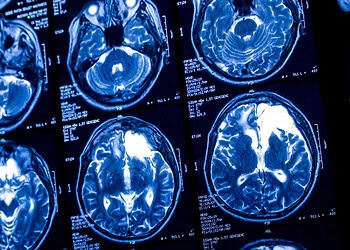
In the next phase of the study, a subset of 80 participants underwent brain scanning using functional magnetic resonance imaging. This technology allows scientists to measure brain activity by tracking tiny changes in blood flow. Before the scan, participants provided brief, written cues for seven personal memories that made them feel guilty, as well as seven emotionally neutral memories.
Inside the scanner, the volunteers were shown these custom cues and asked to mentally relive the emotions associated with each specific memory for ten seconds. After reliving the memory, they had four seconds to answer a question about the location or social nature of the event. Between recalling these different memories, they completed simple math problems. This math task was designed to help shift their attention outward and reset their emotional state before the next memory cue appeared.
During the recall of guilt-inducing memories, the researchers observed a widespread increase in brain activity across several regions compared to neutral memories. Most notably, they found that individuals with higher anxiety scores displayed enhanced functional connectivity between two specific brain areas. Functional connectivity refers to how well different regions of the brain communicate and synchronize with one another during a task.
The enhanced communication occurred between the left superior anterior temporal lobe and the bilateral subgenual anterior cingulate cortex. The superior anterior temporal lobe is a brain area known to process social knowledge and complex social concepts. The subgenual anterior cingulate cortex is a deeper brain region involved in processing social affiliation and feelings of self-worth.
“The neuroimaging analysis revealed that when feeling self-blaming emotions, anxious individuals have higher levels of communication between brain regions responsible for understanding the meaning of social emotions, such as guilt, and areas involved in self-worth and social affiliation processing,” Zareba said. “This suggests that the self-blaming emotions may more strongly contribute to how anxious individuals feel about themselves but also their sense of belonging to others. Interestingly, similar observations on the self-blaming emotions have been previously made in patients diagnosed with major depressive disorder.”
The researchers also measured how much participants wanted to approach or avoid the people and places associated with their guilt memories. They found that a higher desire to approach the memory was linked to increased activity in the left superior anterior temporal lobe. On the other hand, a stronger desire to avoid the memory was linked to enhanced connectivity between the corresponding region in the right hemisphere and areas of the brain involved in physical embodiment and social feedback.
A separate resting-state brain scan involving 86 participants yielded additional insights. During a resting-state scan, participants simply focus on a crosshair without performing any specific task, allowing scientists to observe baseline brain activity. The researchers found that people who reported stronger self-blaming emotions in the earlier behavioral task exhibited lower baseline activity in the right temporal pole. This specific area at the tip of the temporal lobe connects social processing with emotional cognition.
As an exploratory step, the scientists also compared the brain activity patterns seen during guilt recall with existing, public maps of neurotransmitter systems in the human brain. Neurotransmitters are chemical messengers that help neurons communicate. The analysis showed that the brain areas activated by guilt heavily overlapped with the distribution of receptors for serotonin, dopamine, norepinephrine, and oxytocin. This hints that these specific chemical systems play a prominent role in shaping how the brain processes strong, negative emotions about the self.
While this research offers detailed insights into the brain mechanics of anxiety and self-blame, the authors note a few limitations to keep in mind. The study focused on healthy volunteers with subclinical anxiety rather than patients formally diagnosed with a psychiatric disorder. The observed patterns might differ in individuals with a long-term, clinical history of severe anxiety or depression.
“Our study was performed in a sample of subclinically anxious individuals, and therefore it still remains to be seen whether similar differences in behavior and brain processes are also found in patients diagnosed with anxiety disorders,” said senior author Maya Visser, an associate professor at the Department of Basic and Clinical Psychology and Psychobiology at Universitat Jaume I. “In fact, we are currently waiting for the results of a grant application that we submitted for such a project.”
Because the brain imaging portion contrasted personal guilt memories against neutral memories, the identified neural activity might not be entirely unique to self-blame. The brain networks highlighted in the study could also be active during other intensely negative emotions. Also, the behavioral task was translated into Spanish, and the Spanish word for guilt can also mean self-blame, which limits the ability to separate those two specific concepts lexically.
The researchers suggest that future longitudinal studies should track individuals over time to see if these patterns predict the development of more severe clinical disorders. “If we replicate the findings in a clinical sample, our research, combined with the previous studies in depressive patients, might contribute to the establishment of a transdiagnostic neuroimaging biomarker of self-blaming emotions,” Visser said. “Such a tool could help better understand what happens in the brains of patients in the course of different pharmacological and psychological treatments.”
The study, “Subclinical anxiety is associated with reduced self-distancing and enhanced self-blame-related connectivity between anterior temporal and subgenual cingulate cortices,” was authored by Michal Rafal Zareba, Ivan González-García, Marcos Ibáñez Montolio, Richard J. Binney, Paul Hoffman, and Maya Visser.